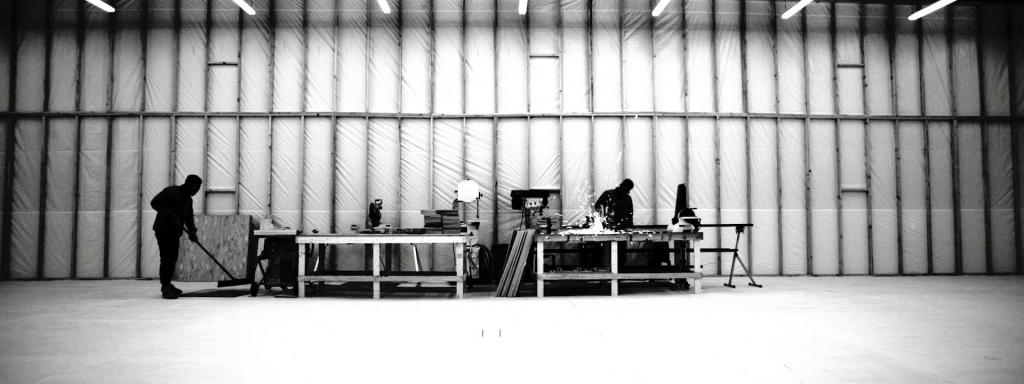
Blond turns ten this year. Hopefully this August 18, I’ll sit with people who love the album, late summer sun streaking through hazy windows, feeling nostalgic for just how down bad I was when it dropped.
Speaking with Frank Ocean fans in the past couple of years, they’re pessimistic.
“He’s never going to drop new music again.”
They speak as if no artist has ever taken a break, as if no artist has ever lived to become someone new before sharing another masterpiece. As if they’ve pored over everything Frank Ocean has ever made.
As my generation started caring about music, we learned to expect “everything” while paying almost nothing. Some of us came to believe that we “listen to everything (except country).” But the type of person who would say that has never had their ideas shattered by an ancient force of music listening, one that smoothly places a needle into the gap between songs on an LP and was outside in 1995.
Whenever the refrain, “He’s never going to drop again,” reaches me, I ask the same question. “Have you heard Endless?”
Some are familiar, but it’s rare to have the same depth of feeling towards Endless as Blond. The “everything” that we have access to does not include one of the four projects released by one of our favorite artists.
The album is not handed to us in search bar or as soundtrack to short videos or in pre-made playlists, so the album never reached many of us.
When Endless is talked about, it’s almost entirely as a part of Frank “finessing” Universal Music Group. This clip of A$AP Rocky explaining the situation is a concise version of events.
Rather than mythologize it, Endless is worth your time, deep consideration, and repeat listens as you grow into someone new. It is especially worth your time when you are alone and when you are thinking back on those who you have loved who are no longer here.
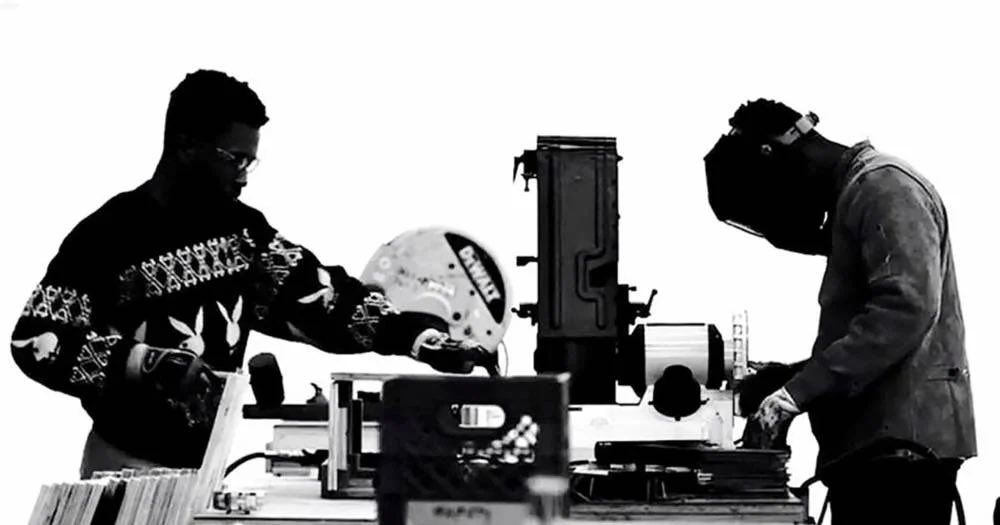
I did not know that “At Your Best (You Are Love)” was an Isley Brothers song when I first listened to Endless. I never knew Aaliyah’s cover. But after an introduction with a flat, AI-sounding voice speaking about an “Apple appliance,” framing Endless through the idea of surveillance and convenience and a representation of reality via digital medium, we begin by admitting the challenge of articulating feeling:
When I feel what I feel,
Sometimes it’s hard for me to tell you so.
The Isley Brothers dedicated the original song to their mother, but something wonderful about misunderstanding music is how meaning can bend to our needs. In my case, bending toward those I love who are no longer here.
In reactions to Endless written in 2016, the album was viewed as a collage, a work in progress, ideas not fully explored, released mostly to satisfy a label agreement. Critics viewed Blond as a more polished work, more cohesive and fully-fleshed out.
After a decade of listening, Endless remains more adventurous and perhaps more personal than Blond.
Blond is an energetic, endorphin-rich summer, and Endless is a dire and cerebral winter.
Blond is a flowing and magical present of youth, while Endless is a haunting and nostalgic look back.
Track 5, “U-N-I-T-Y” features steady and charismatic raps over layered but distant horns and sharp drums. Perhaps some of Frank’s best rapping.
Frank transitions to singing at the end of the song:
U-N-I-T-Y, Neptunes and peace signs
Chiraq, Palestine like
Iberville, 1995
You’d think that was airstrikes on outside
I put refugees in my villa, play kids the Fu-Gee-La
He references music from his childhood, connects the depiction of Chicago as a war zone to the violence and resistance of occupation in Palestine, and then circling back to his own childhood in New Orleans. And just a few lines prior he was discussing how “both nuts weigh two pounds.” This contrast has never bothered me. I am a fan.
I believe a lot music listeners are fiending for albums like Endless: A bit raw, slightly challenging, yet immensely satisfying and expertly crafted (but not mass marketed).
Endless was never Brat. The album is not remixed back into our lives via streaming and social media and deluxe releases.
Much of Endless feels like Frank introducing the listener to a sonic landscape before pulling it away or presenting it a second time through a funhouse mirror or a Berlin club bathroom mirror.
Songs are ushered in and out by audio fragments from drag icons, pulsating synths, and Lion King-like harmonies.
“Wither” looks at a future after war, fallout, escape, after land has been destroyed, and the work to rebuild has begun. The song is subtle because of Frank’s lilting delivery but direct in the speaker’s desire to survive and age openly, visibly, to remain alive in a world that plots against them, partially so that the next generation see that this aging is possible. This is one of the focuses of Hanif Abdurraqib’s There’s Always This Year, a book that pairs well with this album.
In Wither, Frank sings:
Hope our children walk by spring when flowers bloom
Hope they’ll get to see my color
Know that I’ve enjoyed sunshine
Pray they’ll get to see me, me wither
It’s one of a few songs that feels like it could’ve been used in a film the way that “Rushes” was used in Trey Edward Shults’s Waves (2019), which is a fantastic film. Here’s a faux Rushes music video using clips from the film.
Waves explores two young relationships and the implosion of a young man’s life. Rushes does the same (to the point it feels like the song might’ve been written explicitly for the film).
And like in so many of Frank’s songs, there is sex.
Sometimes sex is presented as spiritual release, sometimes as having lost its magic, and sometimes as a way to feel one’s falling apart.
Frank’s seduction on Endless is heightened by the futuristic yet luxurious sounds and the expressive vocal performances backing the desire. Even when the desire feels shallow, even when the listener, the writer, and the lover know the desire leads to emptiness, we cannot help but follow through.
“Rushes Too” (a prime example of an idea being presented a second time through the club mirror) refreshes the listener to present the most consequential song on the project:
Higgs.
The melancholy, reverb-soaked vocals, the inward examination, and the seriousness of “Higgs” pull me in. This is my favorite Frank Ocean song.
Saturdays involved making our entrances into life outside
We’ve been in this room too long
Recreation is keeping us self-contained and aware
Of each other’s forms
Still and in full strides just the same
Keeping us warm
Walking in straight lines
Talking to sleep at night
Coddled and pacified
By versions of mothers
The lines that bring me to tears are in the third verse. Frank’s voice strains:
I’ll be back before
The street lights on, before the daylight’s gone
I was spoiled by lavish thoughts
They don’t compare, no, not at all
And had this been the past I might not know
What to do with all
Of what you’ve showed
What you give, my words can’t hold
And if acts of God breaks us apart
Least we did ours
In the year of our billionaire pedophiles 2026, much of the language we encounter feels like facade or manipulation. Voices on the other side of screens and the screen itself wear multiple masks. This verse feels like the writer tearing their mask to pieces.
In Higgs, the writer’s words fail, and they’re brought to their knees in the face of the love given to them.
When I first heard Higgs, I was still a child. It is an immense joy to grow alongside music like this and understand what is being said through lived experience.
Through hundreds of listens, songs become unknowing witnesses to our change, offering a mirror to how we’ve grown since that first time. On a song with loose structure, the verse feels quite clear:
A promise:
I will come back. Back to you and to the love you’ve given.
In moments of disaster, like during Katrina or in Gaza or in Minneapolis or in many many places in America, these promises of return and retaining one’s belief in said return are themselves a source of life.
An admission:
To love someone fully requires exploring the difference between who we thought and think our beloved is and who they truly are. A desperate, fearful lover views this process, this uncovering, as a burden, but what Frank is admitting and sharing in a way that I find very direct and very masculine is that our thoughts betray us.
Our thoughts do not encompass or represent the beauty of those we love. Instead our thoughts twist that beauty into what we can make sense of.
This song, these specific lines sound like Frank is breaking.
He continues, acknowledging that prior to this moment, he wouldn’t have known what to do with the love given to him. The verse feels like a submission to the infinite possibility of love that Frank was closed off to in the past.
I love when a writer admits that words can’t deliver certainty or describe all feeling. When the ephemera they’re chasing leaves them gasping for air. The writer is desperate for closeness and repair, having come to understand that without true openness and gratitude for the love of others, there is no good life.
And acceptance:
There are forces that may take us from those we love in spite of our promises.
Events so tragic they feel like an act of God even if they are merely the reactions of men.
Then there are actual acts of God. If and when one of those arrives to our doorstep, the streetlights will not save us and neither will a person with a gun and neither will either of us. And so if there is no return to your arms, we did ours. We attempted and perhaps completed what was meant for us. In the face of tragedy, lives and relationships cut short, what is meant for us and “doing ours” is vague, waving away what could have come after.
Even if this love is more infinite than we could’ve imagined and the work to process the love is essential, the world outside does not stop. The time to love and mourn is never handed to us.
This verse echoes the first lines Frank sings on (At Your Best) You Are Love.
When I feel what I feel,
Sometimes it’s hard for me to tell you so.
Higgs ends with what sounds like a soul being sucked from a body.
That soul lands somewhere else…probably that club bathroom in Berlin. The soul steps onto the dance floor where Frank is DJ’ing, the crowd is peaking and he plays “Mitsubishi Sony.”
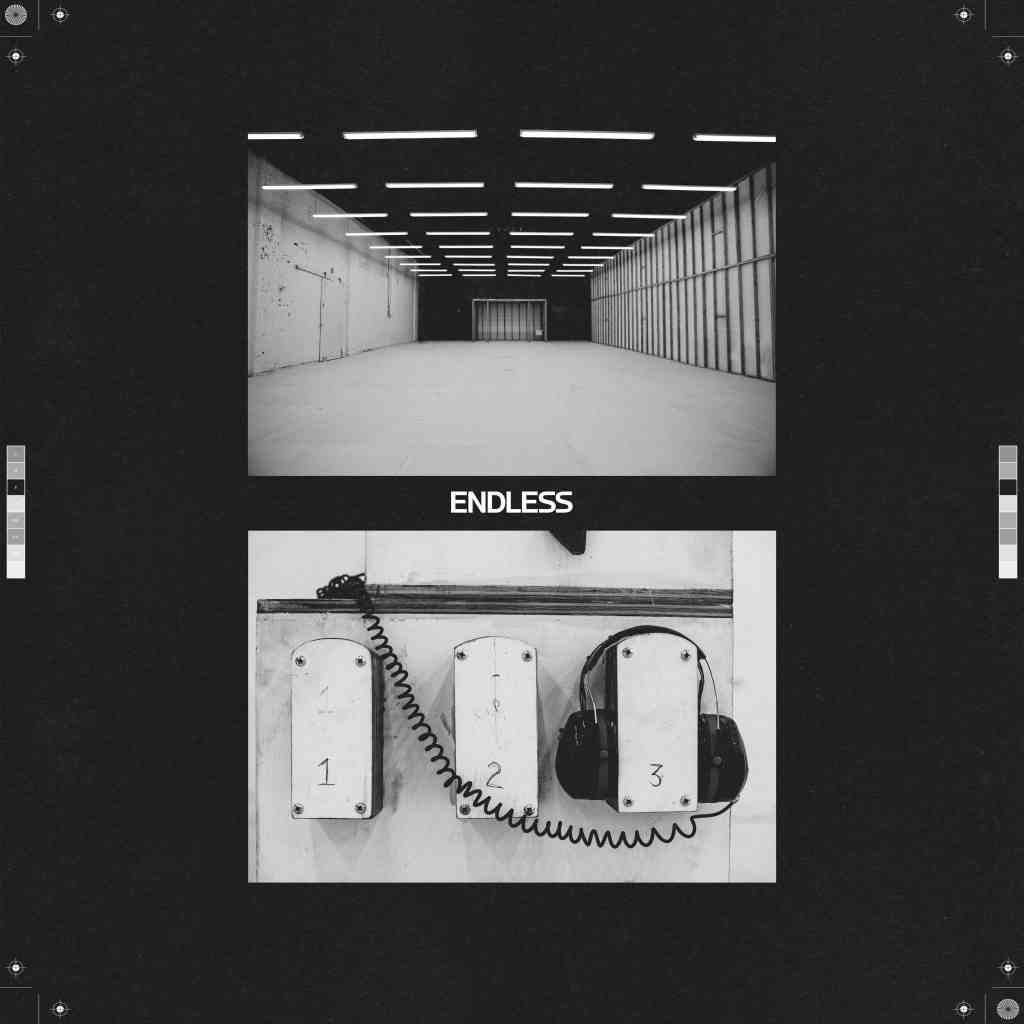
If today’s holiday about the commercial and normative concept of love feels defined by your past more than your present, I encourage you to listen to Endless, Frank Ocean’s intimate, ethereal examination of the past and love amidst winter.
It’s okay to miss everyone who’s come and gone.
Download Endless (hosted by me in Proton Drive, a non-evil version of G-Drive).